
Higher Institute of Media and Communication Arts
Organizational Structure
The City of Culture and Science is considered the largest private higher institutes complex in Egypt.
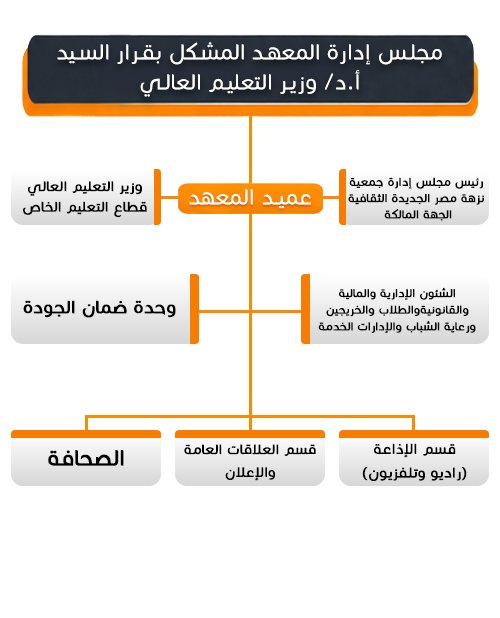


First Year
The academic
content of the first-year at the Higher Institute of Media and Communication
Arts includes a set of core courses aimed at equipping students with the
knowledge and skills necessary in the media field. These include: Computer and
Documentation, Modern and Contemporary History of Egypt, International
Relations and Political Systems, Media Arabic, Media Economics, Applied
Statistics in Media Studies, Media Psychology, Introduction to Artistic
Appreciation, The Emergence and Development of Media, Introduction to Journalism,
A Media Course in a foreign Language, Media Translation, Introduction to Radio
and Television, and Introduction to New Media.

Second Year
The academic content of the second year at the Higher Institute of
Media and Communication Arts includes a set of courses that enhance
students' media knowledge and skills. These include: Media and Social Issues,
Political Geography, English Language, Communication Theories, Media Ethics and
Professional Foundations, Public Opinion and Propaganda, Introduction to Public
Relations and Advertising, Communication Skills, International Media, News and
Its Sources, Introduction to Scientific Research Methods, Media Education,
Media Legislation, and Communication Technology.

Third Year
The academic content of the third year at the Higher Institute of Media and Communication Arts includes a variety of specializations according to the three departments. In the Journalism Department, students study advanced courses covering the arts of journalistic writing (levels one and two), video journalism, journalistic editing, data journalism and infographics, investigative journalism, regional media, photojournalism, management of journalistic institutions, journalism research methods, and social media journalism.
As
for the Radio Department, it includes courses on news and news programs for
radio and television, television photography, radio and television research
methods, skills for presenting audio and visual programs, internet
broadcasting, regional media, multimedia production techniques, radio and
television directing, management of radio and television institutions, writing
for radio and television, and audio-visual media production on the internet.
While
the Public Relations and Advertising Department offers courses in
organizational communication, public relations management, production of public
relations publications and advertising, public relations agencies, the role of
Internet applications in integrated marketing communications, regional media,
writing for public relations and advertising, advertising management and its
economics, media and advertising campaigns, crisis management, and graphic
design.

Fourth Year
The academic content of the fourth year at the Higher Institute of Media and Communication Arts includes advanced and specialized subjects in each of its three departments. In the Journalism Department, students study courses in journalistic translation, specialized journalism (first and second levels), news agencies, electronic journalism, website design for journalism, the history of Egyptian and Arab journalism, special topics in journalism, newspaper advertisement design and editing, international journalism, satire in journalism and media, in addition to the graduation project.
As
for the radio department, it includes courses on translating radio and
television materials, radio and television drama, documentary cinema, radio
stations and specialized channels, acoustics and presentation skills, designing
television websites, special topics in radio and television, media criticism,
editing, production of specialized programs, radio and television advertising,
and the graduation project.
In
the Department of Public Relations and Advertising, students study courses in
translating public relations and advertising materials, social marketing,
international public relations, designing and producing audio-visual
advertisements, reputation and positioning management, research methods in
public relations and advertising, special topics in the field, protocol and
ceremonies, persuasion strategies, designing public relations and advertising
websites, international advertising, in addition to the graduation project.
The study plan
The institute relies, in addition to its faculty members, on many
journalistic experts working in major Egyptian newspapers and practicing
broadcasters on television channels to hone students’ skills in training and
practical experience. The institute also participates in media activities and
competitions at the level of media colleges and departments in Egypt, where it
has achieved top positions in these competitions.
Faculty members also participate in numerous training workshops and
seminars aimed at enhancing the academic and practical level of students, where
students are trained to produce innovative graduation projects under the
supervision of academics and professional practitioners. The institute
continues to develop its educational and professional programs to ensure the
quality of the educational process, improve the performance of faculty members,
and enhance the competence of graduates.
Commitment to
Academic Accreditation and Quality
The
institute’s administration continuously strives to improve the academic and
professional performance of the educational institution by implementing
academic quality standards and ensuring academic accreditation. The institute
also keeps track of all updates in modern media and technological fields to
ensure the preparation of graduates who are capable of meeting the needs of the
media job market and providing them with the necessary knowledge and skills.

About the Unit
The
Graduate Follow-up Unit of the Higher Institute of Media and Communication Arts
aims to enhance effective communication between the institute and its
graduates, and to support their preparation to compete at various levels for
job opportunities in all specializations. It also seeks to keep up with
continuous developments in the labor market, and to work on developing and
improving the institute's academic programs in line with the needs and
requirements of the local and regional market.

Updating Graduates' Data
Structure of the Unit
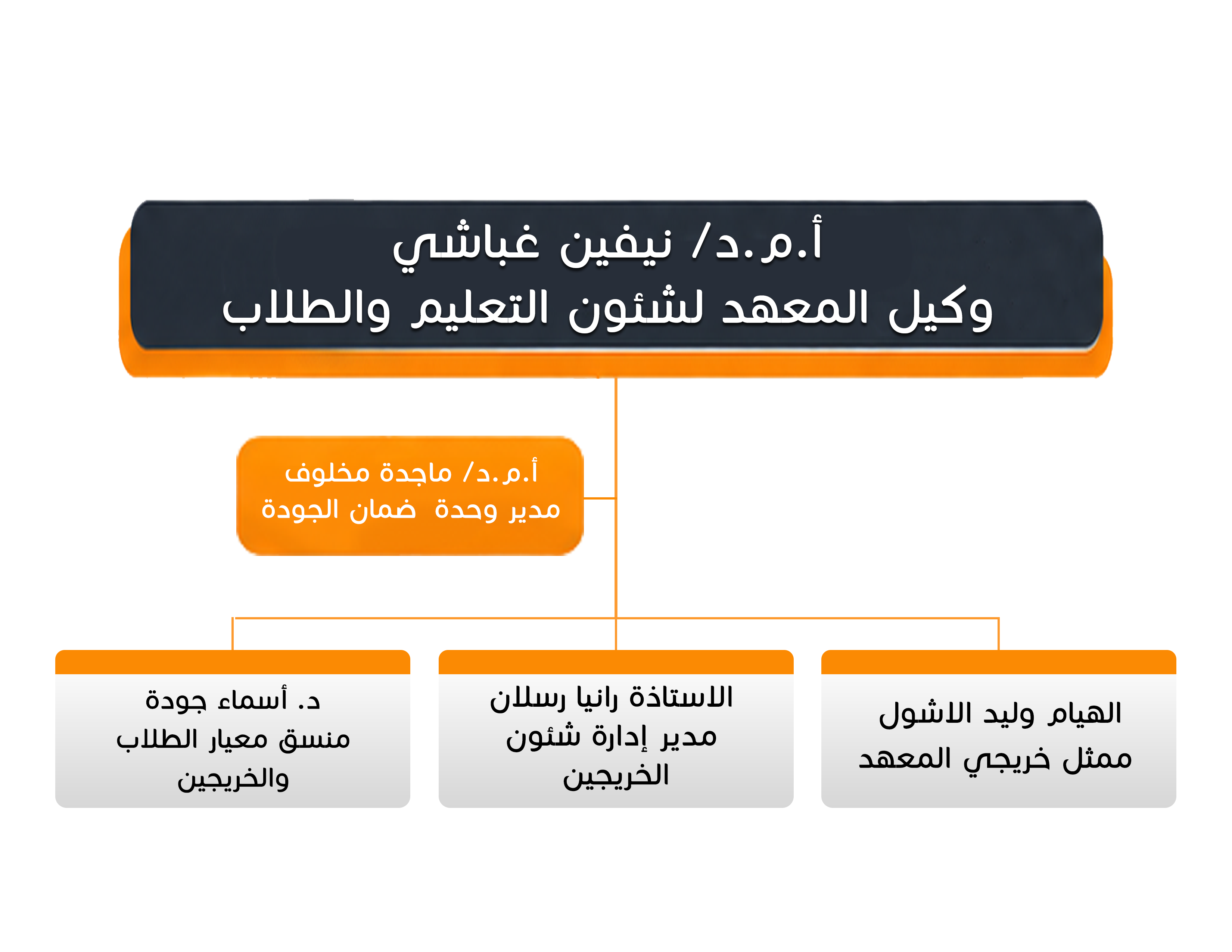

Organizational Structure
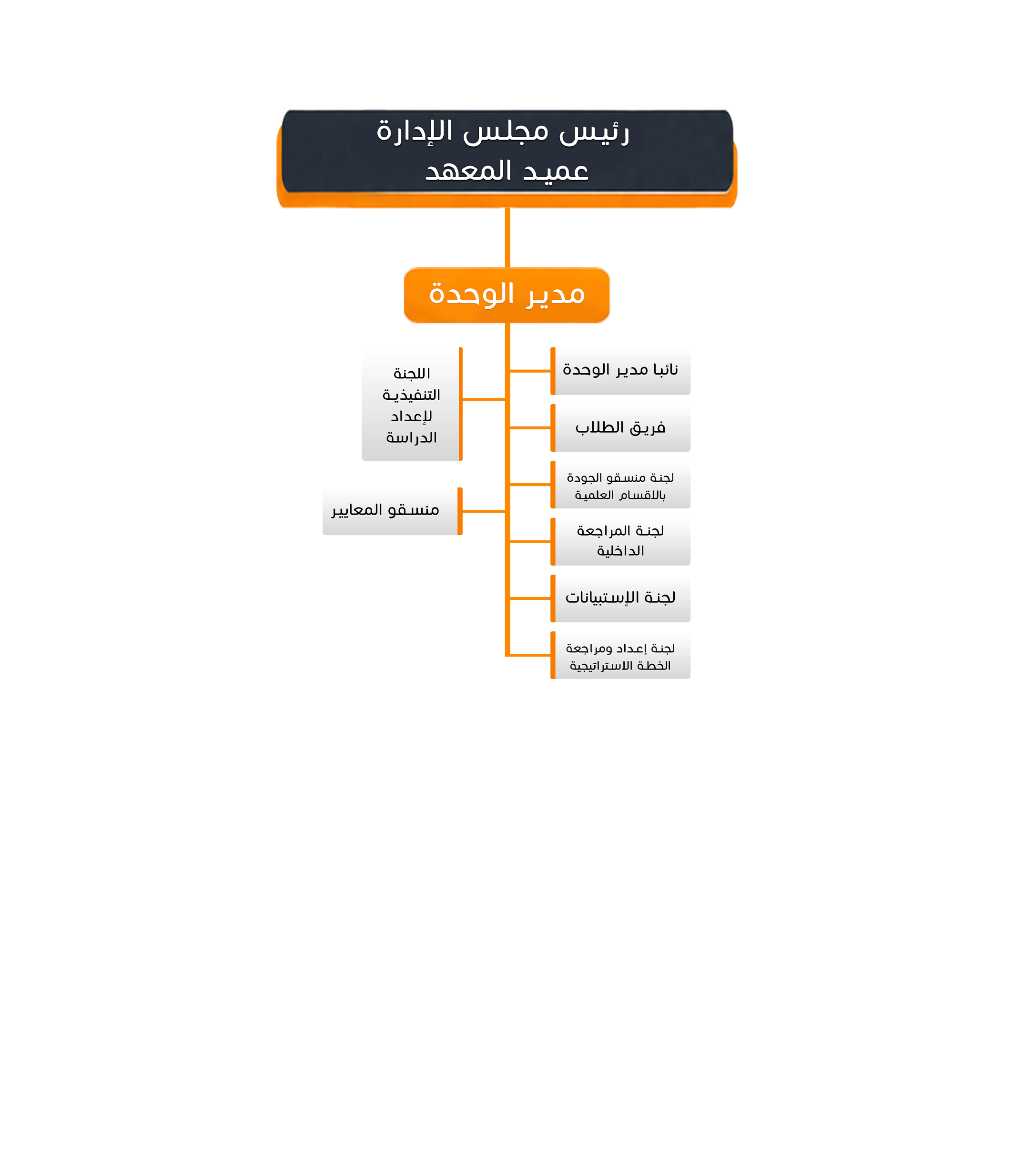
Important Attachments
Results