
Higher Institute of Engineering

 About the Institute
for Engineering 6 October
The Higher Institute of Engineering in the Sixth of October City was established by Ministerial Resolution No. (1404), October 18, 1994, and the institute is affiliated with Nozha Cultural Association. The institute offers only two specializations and grants a Bachelor’s degree in Engineering in one of the following two fields:
Civil and Construction Engineering
Mechatronics
Engineering.
The
esteemed Professor Dr. Minister of Higher Education and Scientific Research has
approved the institute’s regulations in accordance with Ministerial Resolution
No. (1255), October 10, 2020, and the new regulations were also approved in
accordance with Resolution No. (163), March 19, 2018.
The
equivalency of the bachelor’s degree awarded by the institute has been renewed
to the bachelor’s degree in engineering granted by Egyptian universities
subject to the University Organization Law, as follows:
To
the Department of Construction and Building Engineering in accordance with
Ministerial Resolution No. (159), May 29, 2023.
To
the Department of Mechatronics Engineering in accordance with Ministerial
Resolution No. (160), May 29, 2023.
The
study at the institute is applied on a credit hour system and is distributed
over five academic levels (over five years), where students start at a first
general level and then specialize in one of the two specializations starting
from the second level.
The
courses at the institute are in line with the reference framework issued by the
Engineering Studies Sector Committee at the Supreme Council of Universities and
adhere to the approved academic standards.
To
obtain a bachelor’s degree, the completion of no more than 180 credit hours is
required.
About the Institute
The Strategic Plan
The
Higher Institute of Engineering has a strategic plan approved by the Institute’s
Board of Directors for the period from 2024 to 2029. The Institute’s Board of
Directors has approved the methodology for preparing the strategic plan and the
mechanism for its implementation.
-Conducting
workshops to raise awareness about the importance of strategic planning,
methods for analyzing the internal and external environment, and preparation
for this planning, attended by members of the quality team.
-
Collecting data and information through available statistics at the institute,
documents, records, meetings, and surveys with relevant stakeholders.
-
Analyzing the results of the surveys and identifying the needs and expectations
of different stakeholders.
-
Presenting and discussing the results of the environmental analysis with the
relevant stakeholders.
- Identifying
the main strengths, weaknesses, and opportunities documented in the institute’s
strategic plan.
-
Discussing the strategic goals and objectives, as well as the operational
objectives, and determining the institute’s priorities for preparing the
strategic plan.
-
Preparing the executive plan to achieve the institute’s strategic goals and
objectives.
-
Finalizing the strategic plan and having it approved by the institute’s Board
of Directors.
-
Defining a mechanism to monitor the implementation of the strategic and
executive plans and how to analyze achievement rates and discuss them in the
institute’s council.
The Higher Institute of Engineering is committed to graduating engineers capable of meeting the needs of the local and regional labor market at a distinguished competitive level, within the framework of values and customs that support community service, continuous self-learning, and innovation through the development of educational programs, research tools, and entrepreneurship.
The Higher Institute of Engineering aims to achieve a distinguished position locally and regionally within the framework of societal and humanitarian values.
 City of Culture and Science
Faculty Members
The City of Culture and Science is considered the largest private higher institutes complex in Egypt.

Ihab Baghdadi
Professor Doctor
Khaled Ali
Assistant Professor
Amer Ahmed Abdelhakeem
Lecturer
Sherif El-Beshlawy
Lecturer
Mohammed Tayseer
Lecturer
Marwa Shehata
Lecturer
Monera Ahmed
Lecturer
Maya Mohammed
Lecturer
Gerges Edwar
Lecturer
Taher Anwar:
Assistant Professor
Ayman Abo Raya
Lecturer
Ihab Hadeeb:
Lecturer
Mohammed Fathy
Lecturer
Dalia Ahmed
Lecturer
Mohammed Tawfik
Lecturer
Shaimaa Ahmed
Lecturer
Shaimaa Farouk
Lecturer
Inas Medhat
Teaching Assistant
Mai Mohammed
Teaching Assistant
Rania El-Sayed
Teaching Assistant
Amal Eid
Teaching Assistant
Omar Ahmed
Teaching Assistant
Mohammed Mohammed Dyiaa
Teaching Assistant
Pierre Bakhit:
Teaching Assistant
Hussein Eid
Teaching Assistant
Bahi Bakhit
Teaching Assistant
Huda Eid
Teaching Assistant
Mazen Samir
Teaching Assistant
Fawzy Saad
Teaching Assistant
Israa Tayseer
Teaching Assistant
Zakaria Mahmoud
Teaching Assistant
Abanoub Refaat
Teaching Assistant
Hend Mohammed
Teaching Assistant
Asmaa Mohammed
Teaching Assistant
Alaa Mohammed
Demonstrator
Islam Mohammed
Demonstrator
Hussein Mohammed
Demonstrator
Mohammed El-Sayed
Demonstrator
Mohammed Abderahman
Demonstrator
Mahmoud Saber
Demonstrator
About the Institute
Institute Regulations
The regulations of the Higher Institute of Engineering in the City of Culture and Science have been approved by the Ministry of Higher Education to organize the credit-hour study system and ensure that the courses are in line with the reference framework for engineering faculties, aiming to achieve educational quality and meet labor market requirements.

Amended internal regulations
View Regulations
Internal regulations
View Regulations
 Dean’s Speech
Prof. Dr. Ahmed Maged
I am
pleased to welcome you to the halls of the Higher Institute of Engineering, and
I extend my heartfelt congratulations to the new students on joining the
institute, as well as congratulating the returning students on the start of the
new academic year, wishing that it will be a year filled with progress and
success.
I
hope that all of you exert efforts into your studies and to actively
participate in various student activities. We hope that a genuine academic
spirit prevails among you and your colleagues from other institutes in Science
and Culture City, and that each of you becomes a role model concerning words,
actions, and behavior.
I
ask Allah to grant us all success in what is good for our beloved homeland
Egypt. And peace be upon you and God’s mercy and blessings.
Admission and Registration

For Egyptian Students
The
institute accepts students who have obtained a General Secondary Education
Certificate (Scientific - Mathematics track) or its equivalent, as well as
students who have obtained an industrial secondary certificate (three-year
system and five-year system).
The duration of study at the institute is five academic years, and those who successfully complete it are awarded a Bachelor’s degree in one of the following specializations (Construction and Building – Mechatronics)

For Foreigner Students
First:
Through the Foreign Students Office
This is done through the electronic
coordination office for foreign student affairs (Study in Egypt website).
The
student nominated for the institute is not considered enrolled until the
tuition fees are paid.
Transfers
Foreigner
students are transferred through (study in Egypt) website and directed to the Office of International Student
Affairs.
Institute Activities
The Institute is keen on supporting a comprehensive university life through a variety of studentactivities, including scientific, cultural, sports, and artistic activities, as well as field trips, workshops, and practical training. These activities aim to develop students’ skills, enhance their spirit of innovation and teamwork, and create a stimulating educational environment that supports both academic and professional aspects.


Preliminary (000)
The
Higher Institute of Engineering offers distinguished core courses including
mathematics, physics, mechanics, and engineering chemistry, in accordance with
the latest academic standards. The content has been carefully prepared to meet
the requirements of the labor market and to provide maximum educational benefit
to students within the credit hour system. For more details, click here .

Second Year (100)
The Higher Institute of Engineering offers two accredited engineering programs: Mechatronics Engineering, which integrates mechanics, electronics, programming, and control systems, and focuses on robotics applications and mechanical design; and Construction and Civil Engineering, which emphasizes the analysis and design of structures, building materials, surveying, foundation engineering, as well as management and quality control. Both programs aim to provide students with comprehensive academic education and practical skills that prepare them for the labor market. “More details ( Construction and Civil Engineering – Mechatronics)

Third Year (200)
The students study a set of advanced courses within one of the two accredited programs: Mechatronics Engineering, which includes mechanical design, electronic systems, control, and robotics, or Construction and Civil Engineering, which covers structural analysis and design, soil mechanics, foundation engineering, and project management. These courses aim to enhance practical skills and build a strong knowledge base that prepares the student for the final stage of studies and the labor market. More details (Construction and Civil Engineering – Mechatronics)

Fourth Year (300)
The
students continue their advanced studies within one of the two accredited
programs: Mechatronics Engineering, where they study subjects such as control
systems, robotics, measurements, and programming, or Construction and Building
Engineering, which includes the design of concrete and metal structures,
building construction, foundation engineering, and quality control. This stage
aims to deepen applied engineering understanding and develop specialized skills
in preparation for labor market requirements and the graduation project. More details (Construction and Civil Engineering – Mechatronics)

Fifth Year (400)
The
students continue their studies through advanced specialized courses, alongside
carrying out a practical graduation project that embodies what they have
learned throughout their years of study. In Mechatronics Engineering, the
student studies the design of intelligent systems, precision control, and
advanced programming, while in Construction and Building Engineering, they
delve into the design of private structures, building restoration, project
planning, and environmental engineering. This stage aims to comprehensively
prepare the student for the labor market and enable them to apply their
knowledge in an integrated engineering project that reflects their competence
and professional readiness.More details (Construction and Civil Engineering – Mechatronics)
Study plan
The Higher
Institute of Engineering in Science and Culture City offers two distinguished
programs in Construction Engineering and Mechatronics Engineering, according to
the credit-hour system, totaling 180 credit hours. The courses are taught in
English, with the application of academic standards that ensure the quality of
education and the qualification of graduates.
First:
Construction and Building Engineering
Program
The curriculum
for the Construction and Building Engineering program is implemented according
to the credit hours system. The study includes a minimum of ten main academic
semesters, totaling 180 credit hours. The academic year is divided into two
main semesters, with the option to register for an intensive summer semester
under specific conditions. The courses are offered in English, with the
possibility of teaching some courses in Arabic, and it is required to pass an
English proficiency placement test upon enrollment. The institute may also
require the student to take two preparatory courses, whose hours are not
counted towards the credit hours, based on the academic assessment at the time
of application.
Second:
Mechatronics Department
The curriculum
for the Mechatronics Engineering program at the Higher Institute of Engineering
is implemented according to the credit hour system. The study duration is a
minimum of ten main academic semesters, totaling 180 credit hours. The academic
year is divided into two main semesters, and students have the option to
register for a summer semester under specific conditions. The courses are
offered in English, with some courses potentially taught in Arabic, and passing
an English proficiency placement test is required. Additionally, the institute
may require the student to take two preparatory courses not counted towards the
credit hours at the beginning of the program, based on the results of the
initial academic assessment.

Scientific Research
About the Unit
The
unit aims to enhance students’ connection with the institute
through multiple communication channels and assist companies and organizations
in searching for qualified personnel from its graduates. The unit monitors the
employment status of graduates to ensure alignment with their specializations
and measures the satisfaction level of employers and graduates regarding their
skills. It also seeks to build an electronic information system and a database
on the institute’s website to document graduate data. The unit places
importance on continuous communication with them through meetings and
gatherings, using social media platforms such as Facebook and WhatsApp, in
addition to organizing an annual employment forum that introduces students to
various career fields, trains them during their studies, and acquaints them
with labor market requirements.


Tasks of the Unit
The
unit is responsible for periodically updating the graduates’ databases, whether
monthly, quarterly, or annually, while maintaining open communication channels
with them through social media. It also coordinates with companies and
institutions to provide the latest information about job opportunities and
labor market requirements, and works on measuring graduates’ career trends
through specialized surveys. The unit is keen on building an electronic
information system on the institute’s website that includes updated graduates’
databases, in addition to tracking their employment status and assessing the
alignment with available specializations, as well as supporting companies and
institutions in searching for qualified graduates from the institute and
enhancing the relationship between them and the institute.
Activities of the Unit
The
activities of the unit include continuous communication with graduates through
meetings, gatherings, and social media platforms such as Facebook and Whatsapp,
in addition to regularly updating their database on a monthly, quarterly, or
annual basis through surveys and direct communication methods. The unit also
provides support to companies and organizations seeking graduates from the
institute and coordinates with them to provide the latest information on job
opportunities and market requirements. In order to enhance employment
opportunities, the unit organizes an annual forum aimed at introducing students
to various fields of work and training them during their studies, in addition
to organizing specialized events such as the “Entrepreneurship” seminar.

Updating Graduates' Data
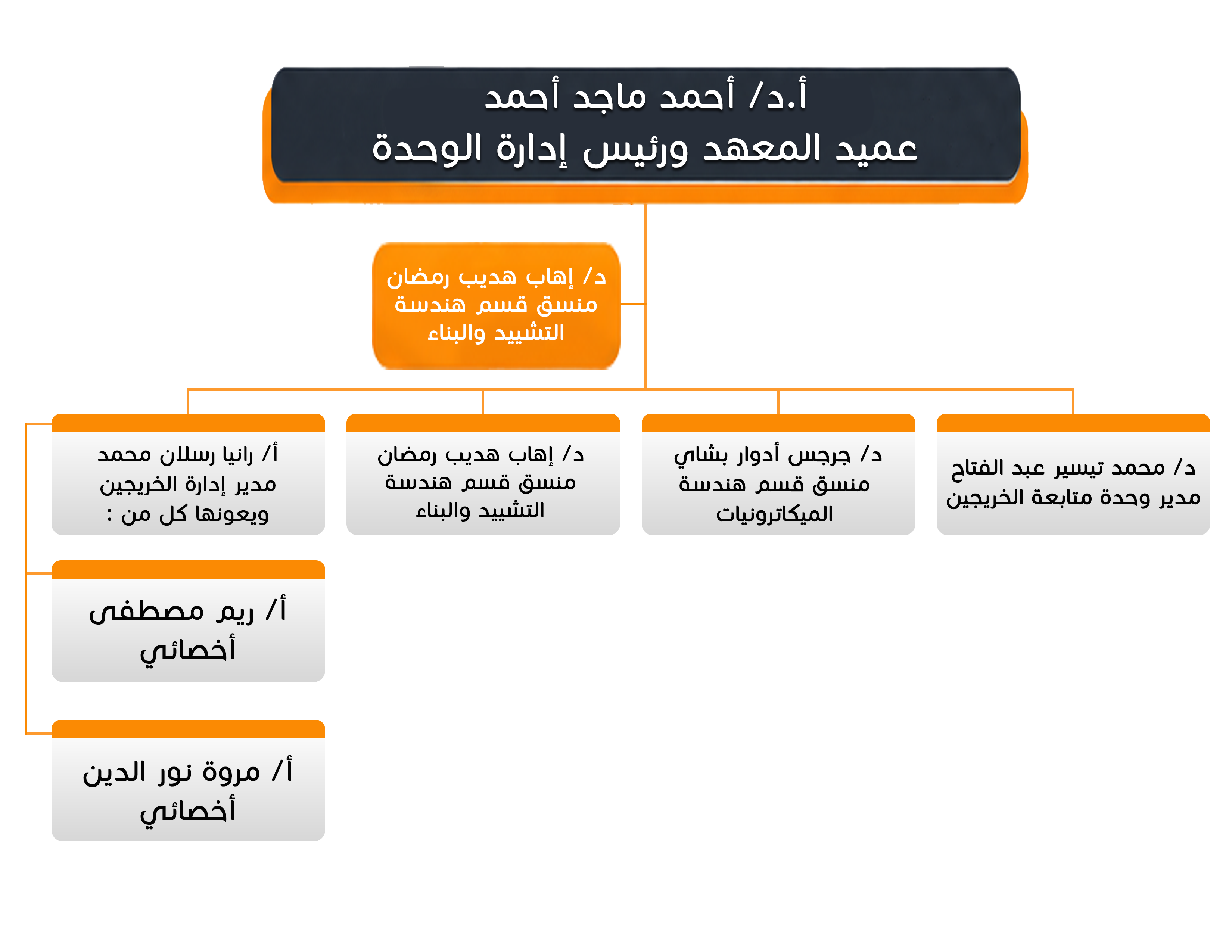
Structure of the Unit


Employment Forum
More Details
UNICEF certificates which are approved by the Ministry of Youth and Sports
More Details
A seminar entitled “Entrepreneurship”
More Details
Blood Donation
More Details
About the Unit
The Quality Assurance Unit at the Higher Institute of Engineering was established in 2010, and the unit was accredited as an administrative entity responsible for monitoring and evaluating performance within the institute according to the decision of the Higher Institute of Engineering Council No. (2) dated 12/3/2014 for the academic year 2013/2014 to activate the work of the Quality Unit
Applying basic academic standards is the way to achieve continuous development of academic performance
The Quality Assurance Unit at the Higher Institute of Engineering seeks to support the quality of the educational and research process and community service by promoting a culture of quality among all elements of the institute and developing academic programs in line with national accreditation standards. The unit also works on improving graduates’ competencies, monitoring the implementation of evaluation and continuous development mechanisms, handling student complaints, and enhancing community participation and communication with graduates, contributing to achieving the institute’s vision and preparing it for institutional and program accreditation.
The Quality Assurance Unit seeks to implement local and international academic standards with the aim of continuous development
Internal Regulations of the Quality Assurance Unit
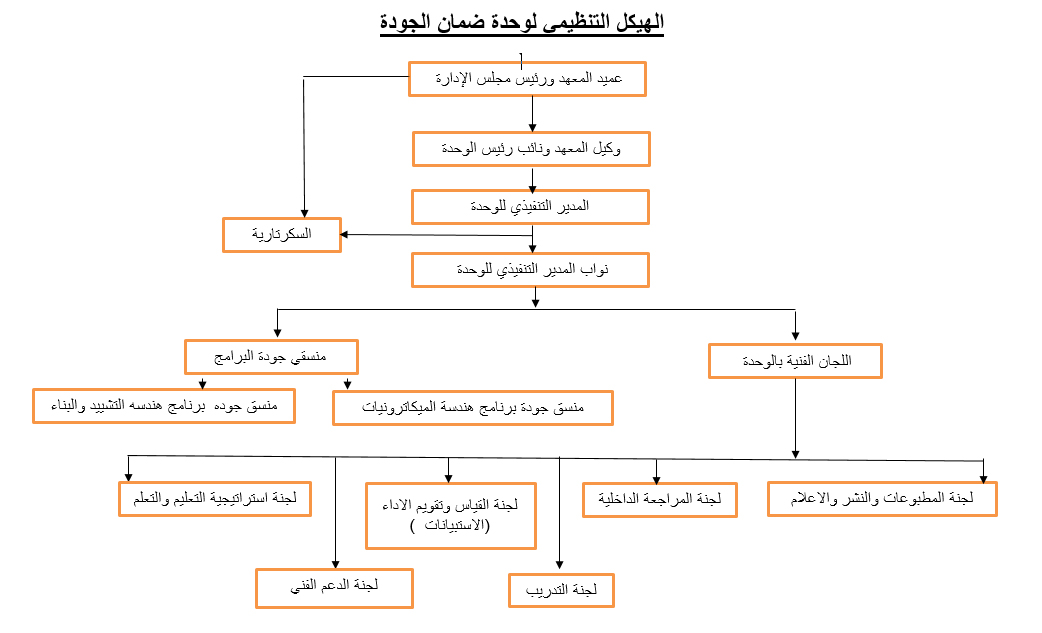
Quality Unit Committees
The
Quality Assurance Unit at the Higher Institute of Engineering is responsible
for organizing the work of several specialized technical committees to ensure
the implementation of quality standards and achieve continuous development.
These committees include: the Technical Support Committee, which provides
necessary support, conducts field visits, and educates staff on mechanisms for
drafting development projects and following up on their implementation; the
Internal Audit Committee, responsible for evaluating institutional and academic
performance within the institute, preparing quantitative evaluation metrics,
identifying deviations from standards, and proposing appropriate solutions; the
Performance Measurement and Evaluation Committee (questionnaires), which
monitors quality assurance activities, submits reports to the Board of
Directors, and studies response indicators to evaluation results; the
Publications, Media, and Outreach Committee, which works on promoting a quality
culture, updating the institute’s data and achievements, and promoting its
activities through various media; and finally, the Training Committee, which
develops training policies and plans, organizes courses and workshops, monitors
the impact of training, and enhances training capabilities within the
institute, contributing to improving performance efficiency and achieving
comprehensive quality.


Quality Work
During
the recent period, the Quality Assurance Unit at the institute witnessed a
series of achievements, including updating the institute’s vision and mission,
designing a logo and mission statement for each program, preparing student
guides and field training manuals, and updating teaching and learning
strategies. Program descriptions were also amended according to NARS 2018
standards, gap studies were prepared, workshops and training courses were
conducted, self-study reports were completed, and the strategic plan
(2024-2029) was prepared and uploaded to the authority’s website. Additionally,
courses and programs were reviewed, and files were submitted for the
accreditation of the Mechatronics Engineering and Construction Engineering
programs. Efforts also included developing the quality office, holding
seminars, reviewing exam papers, and providing incentives for research and
quality initiatives. Preparations are currently underway for both logistical
and academic arrangements to welcome the authority’s visit committee, including
reviewing both paper and digital control systems, ensuring safety in classrooms
and laboratories, and training various groups for meetings with the authority.
Unit Activities

Organizing a seminar entitled “Preparing Graduation Projects”

Workshop lectures to raise awareness of standards for faculty member

Awareness courses for students on the importance and role of quality in education
Academic Standards
The National
Academic Reference Standards (NARS) are the framework that defines the minimum
skills, knowledge, and competencies that a graduate of any academic program at
higher education institutions in Egypt must possess. They were issued by the
National Authority for Quality Assurance and Accreditation of Education
(NAQAAE) to ensure a unified level of graduates across universities and
institutes, while taking into account the specifics of each discipline. The
process of accrediting higher education programs by the National Authority for
Quality Assurance and Accreditation of Education includes a set of standards,
which are: program mission and management, program design, teaching, learning
and assessment, students and graduates, faculty members and supporting staff,
resources and learning resources and supporting facilities, quality assurance,
and program evaluation.

Program Specification

Description of the Mechatronics Engineering Program

Description of the Civil Engineering Program
Program Reports

Report of the Construction and Building Department Program

Report of the Mechatronics Program
Organizational Structure
About the Unit
The
institute has an academic guidance system announced through the bulletin board
and the Microsoft Teams platform. The academic guidance unit aims to help
students choose courses according to the institute’s regulations. The academic
advisor monitors students’ academic levels through the course management
system, prints advising forms to discuss them with students, and assists them
in registering for available credit hours based on their GPA, in addition to
issuing written warnings to students when their cumulative GPA is low and
reducing the number of registered hours. The advisor also reviews and
electronically approves the advising forms and monitors digital registration.
Communication with students, especially during the COVID-19 crisis, was
enhanced through university email and the Microsoft Teams platform, where
students were divided into four levels with designated channels for each course
supervised by faculty members. The academic advising guide was also published
to facilitate understanding. Specialized committees review the registrations,
and statistical reports are prepared to track the number of registrations for
each course and to adjust classroom density in accordance with the maximum
allowed capacity.


Tasks of the Unit
The
tasks of the academic guidance unit involve helping students select courses in
accordance with the approved regulations, by using course management systems to
print an advising form for each student and monitoring their academic progress
in terms of level, cumulative GPA, number of completed and remaining credit
hours and courses, as well as course grades. There are also clear mechanisms
for reviewing student registrations through specialized academic advising
committees. The advisor prints the advising form and discusses it with the
student according to the institute’s internal regulations, in addition to
assisting the student in registering the allowed number of credit hours based
on their cumulative GPA. In cases of low GPA, the registered credit hours are
reduced and the student is warned in writing, then the forms are approved after
being signed by the students to be entered into the digital system, with the
digital registration being reviewed and verified by the academic advisor.
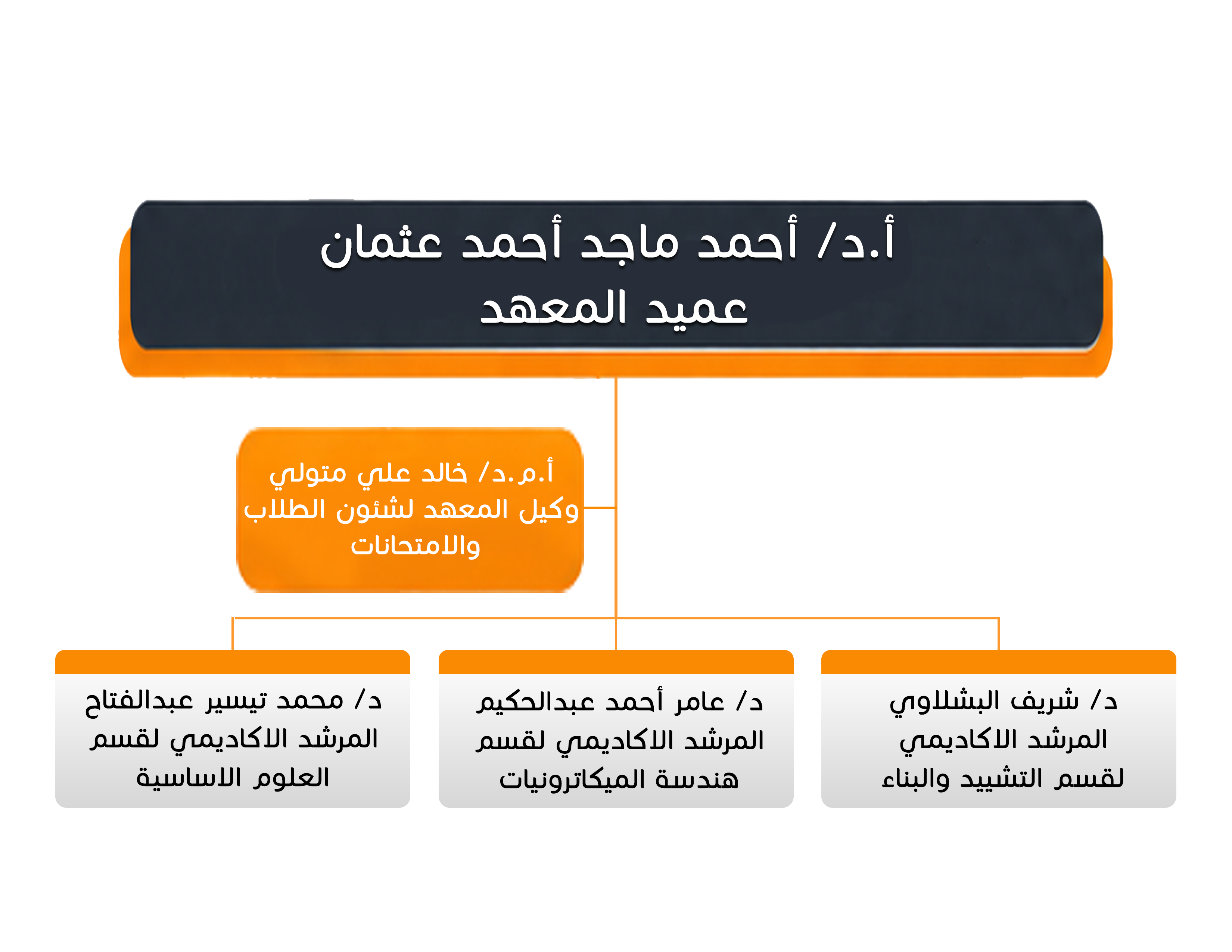
Structure of the Unit
Important Attachments

Academic Guidance – Mechatronics
The Academic Guidance for students for the academic year 2023-2024, prepared by the Quality Assurance Unit, provides a comprehensive framework to support students in the Mechatronics Engineering Department

Academic Guidance - Construction and Building
The Academic Guidance for the Construction Department for the academic year 2023/2024 provides a comprehensive framework to support students throughout their years of study

Student Guide for the Mechatronics Engineering Program
The Student Guide for the Mechatronics Engineering Program provides a comprehensive overview of the academic study system, approved courses, and regulations governing the educational process, along with important guidelines regarding student rights and responsibilities

Student Guide for the Construction and Building Program
The student guide for the Construction Engineering and Building Program provides a detailed explanation of the study system and academic courses, in addition to rights and responsibilities, and guidelines for university life within the institute

Mechatronics Engineering Department Courses
The Mechatronics Engineering program includes a set of courses that combine mechanics, electronics, control, and programming, such as control systems, robotics, mechanical design, and thermodynamics, with the aim of preparing technically qualified graduates for the labor market

Construction and Building Engineering Department Courses
The Construction and Building Engineering program includes a set of specialized courses that cover structural, engineering, and managerial aspects, such as structural analysis and design, building materials, soil mechanics, foundation engineering, construction project management, and technical drafting

Main Courses
The core courses at the Higher Institute of Engineering include a set of general subjects that form the scientific foundation for engineering programs, such as mathematics, physics, engineering chemistry, mechanics, and engineering drawing. These courses aim to develop the student's analytical and intellectual skills and build a strong knowledge base that qualifies them to understand specialized courses and deal with various engineering challenges


Results